Early-Season Phosphorus Deficiency in Corn: Understanding Purple Corn at V2
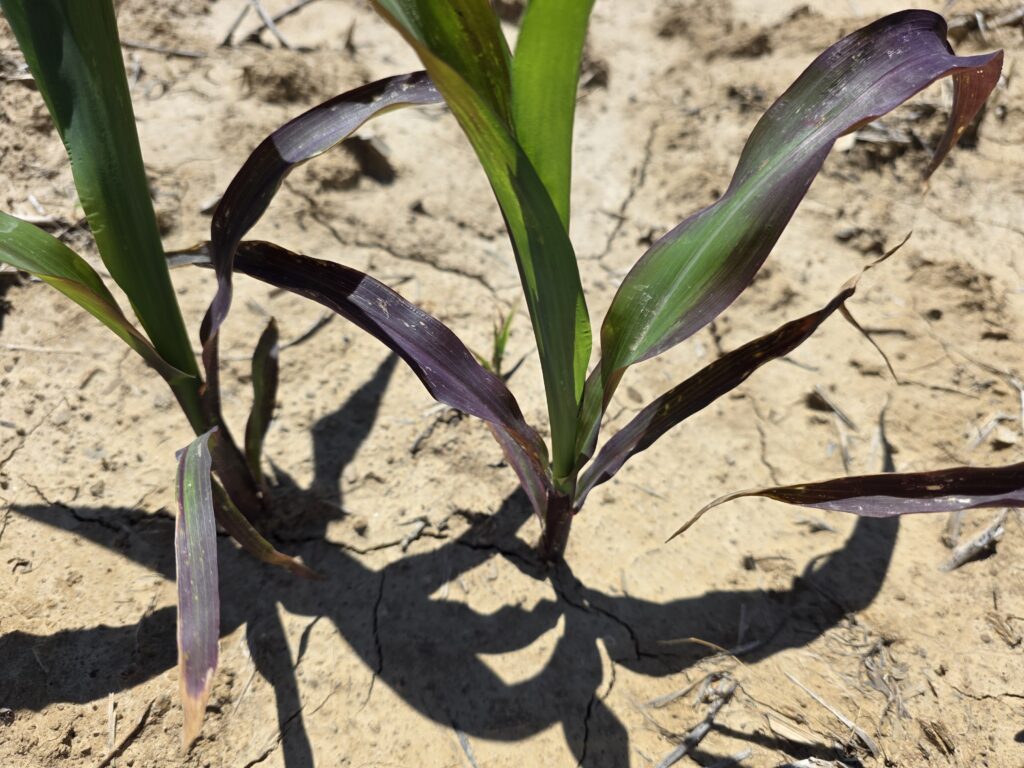
The purple coloration appearing in this V2 corn field is a strong indicator of early-season phosphorus (P) deficiency. At this stage, young corn plants rely heavily on accessible phosphorus to support rapid root development, energy transfer, and early vegetative growth. When uptake is restricted, anthocyanin pigments accumulate in the leaf tissue, creating the purple to reddish-purple appearance visible on lower leaves and leaf margins.
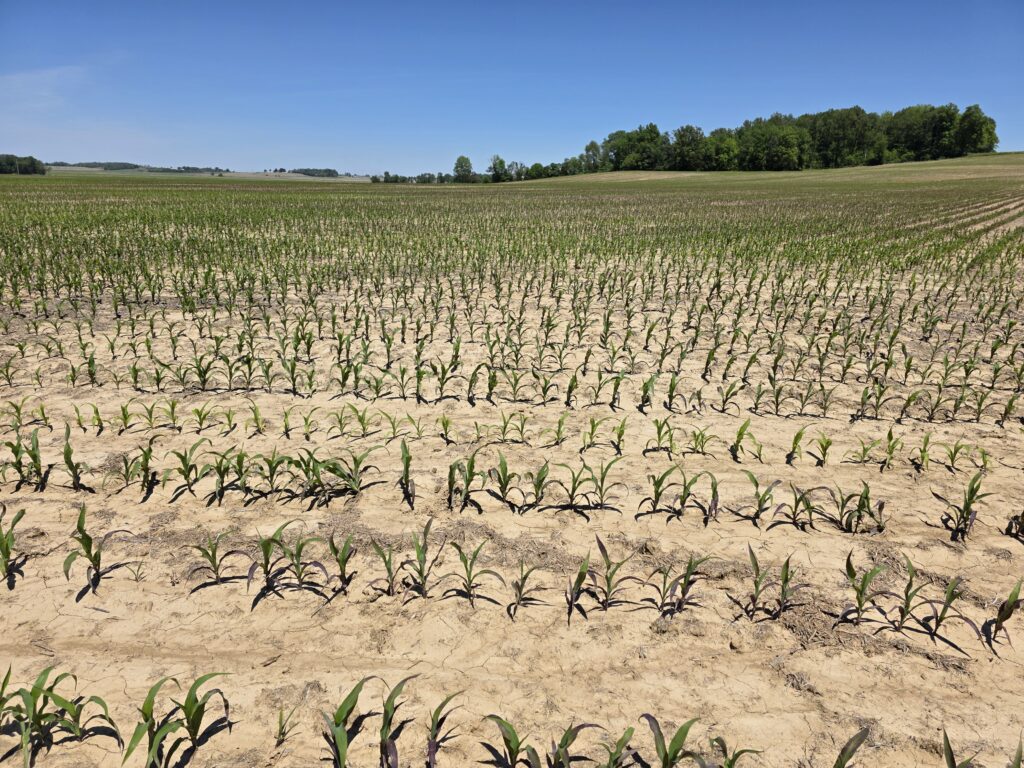
In this field, environmental conditions are likely amplifying the issue. Dry surface soils, visible crusting, and limited moisture are reducing nutrient movement and slowing root expansion. Even in fields with adequate soil phosphorus levels, young corn can still show deficiency symptoms when roots cannot efficiently access nutrients. Early-season stress is especially common in sandy soils, compacted areas, or fields with reduced microbial activity.
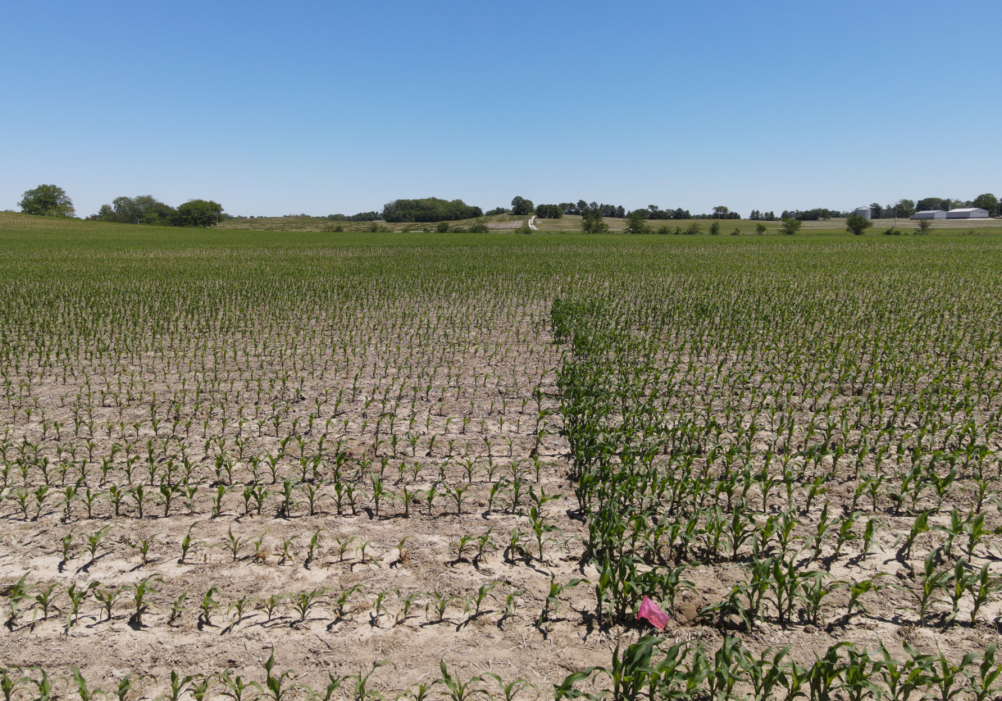
Phosphorus drives several critical functions in corn production, including ATP energy transfer, root architecture, seedling vigor, and nutrient metabolism. When phosphorus availability is limited during early growth, plants often become stunted and uneven, delaying canopy development and reducing yield efficiency later in the season.
The immediate focus should be improving nutrient availability and reducing plant stress before rapid vegetative growth accelerates. Soil and tissue testing are important tools for confirming phosphorus status while identifying additional factors such as pH imbalance, compaction, or micronutrient interactions. A balanced liquid fertility program can help improve nutrient accessibility, support root growth, and maintain crop momentum during stressful growing conditions.
Monty’s Plant Food works with growers across the United States to strengthen nutrient efficiency, soil health, and plant performance through advanced liquid fertility technologies designed for high-yield production systems.
Key Agronomic Factors Contributing to Purple Corn at V2
| Agronomic Factor | Impact on Corn Growth |
| Cool soil temperatures | Slows phosphorus uptake and root activity |
| Dry or crusted soils | Restricts root expansion and nutrient movement |
| Le compactage | Limits root mass and nutrient interception |
| Low phosphorus availability | Reduces energy transfer and seedling vigor |
| Poor soil biology | Decreases nutrient cycling and phosphorus efficiency |
| Zinc interaction issues | Can intensify phosphorus deficiency symptoms |
Recommended Next Steps
- Pull both soil and tissue samples immediately
- Evaluate starter fertilizer placement and phosphorus availability
- Assess soil compaction and rooting depth
- Support root development with a balanced liquid fertility program
- Monitor new growth for recovery within 7–14 days
- Work with a Monty’s Plant Food representative to build a season-long nutrient efficiency plan
Corn can recover from early phosphorus deficiency when nutrient uptake improves before rapid vegetative growth begins. The focus now should be on restoring root function, improving nutrient accessibility, and protecting yield potential during this critical developmental window.
*********************
Learn more about corn deficiencies ici and Monty’s soil and tissue testing solutions ici.
*********************
For additional agronomic support and nutrient management solutions, visit:
www.montysplantfood.com or contact your Représentant de Monty.
References
- IPNI (International Plant Nutrition Institute) — Phosphorus Deficiency in Corn
- Purdue University Extension — Nutrient Deficiency Symptoms in Corn
- University of Minnesota Extension — Early Season Corn Nutrient Deficiencies
- Iowa State University Extension — Understanding Purple Corn Symptoms
- USDA NRCS Soil Health Principles
- Monty’s Plant Food Company — Plant Nutrition and Soil Health Resources


 English
  Arabic
  Bengali
  Chinese
  French
  German
  Hindi
Hindi  Indonesian
  Portuguese
  Russian
  Spanish