The post How Monty’s Plant Food Is Helping Indiana Farmer Jason Evans Push Yield Potential and ROI appeared first on Monty's Plant Food.
]]>Jason Evans believes every acre should deliver a return. Farming 2,600 acres in Indiana — including 1,050 acres of corn and 1,550 acres of soybeans — Jason is focused on improving soil health, nutrient efficiency, and increasing ROI through precision fertility management. His operation includes both white and yellow corn, carefully managed to prevent contamination between crops.
Over the past few years, one of the biggest changes on Jason’s farm has been partnering with Monty’s Plant Food and adopting a more data-driven approach to crop nutrition.
“We’re always trying to fine-tune the system,” Jason explained. “I don’t want to just throw products at the field. I want to understand what’s happening in the soil and what’s driving the crop.”
This season, Jason ran a Monty’s ProtoColl program on all his acres, but focused more heavily – higher rates — on 157 acres using his 24-row planter. One of the most noticeable moments came during planting when he stopped to refill seed. The overlap area received approximately 30% more ProtoColl, totaling about four gallons in that section.
“You could physically see the difference,” Jason said. “The corn where the overlap happened was taller, thicker, heavier, and noticeably healthier.”
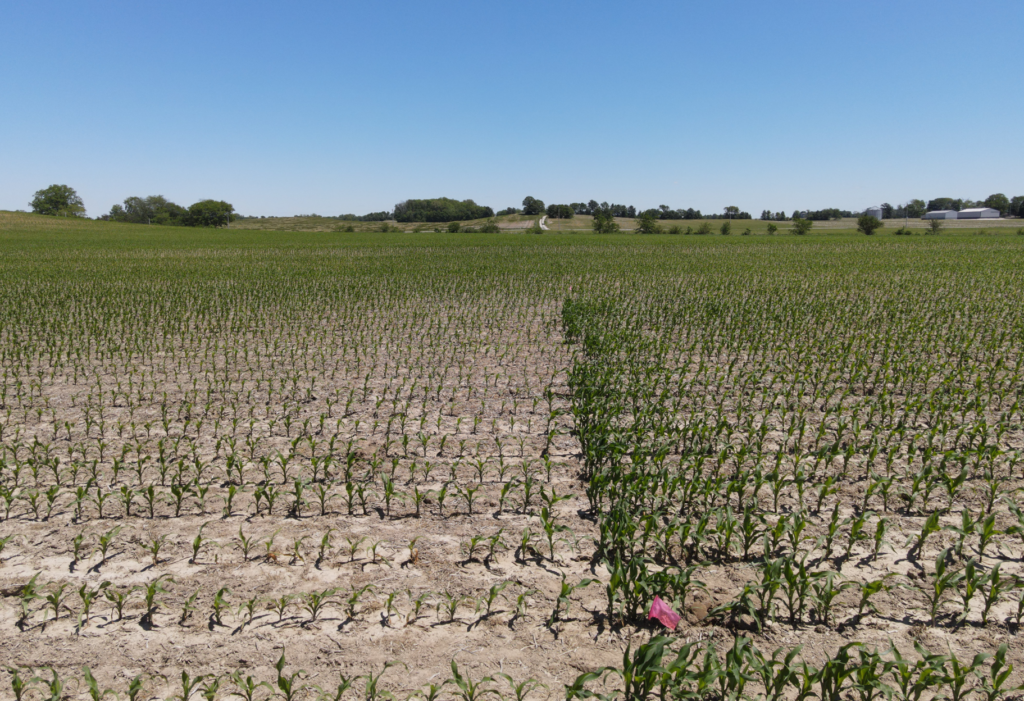
For Jason, it was another clear example of the value biological crop nutrition and humic-based fertility programs can provide. He believes Monty’s products, paired with consistent testing and targeted nutrition, are helping move yields in the right direction while improving ROI.
Joe Dedman, Monty’s Vice President of Agronomy, says Jason’s approach reflects modern precision agriculture at its best.
“Jason isn’t guessing,” Joe said. “He’s using data, observations, and plant response to make decisions. That’s where Monty’s products really shine — helping unlock nutrient efficiency, improve root development, and maximize what’s already in the soil.”
Jason’s fertility program begins at planting with both in-furrow and 2×2 applications. In-furrow, he applies the unique, encapsulated ProtoColl 7 because of its 100% orthophosphate formulation, helping nutrients become immediately available to the developing crop.
“That orthophosphate availability was a big reason I chose ProtoColl 7,” Jason explained. “You want that crop feeding right away. And the encapsulation allows the nutrients to stays near the root zone for better uptake.”
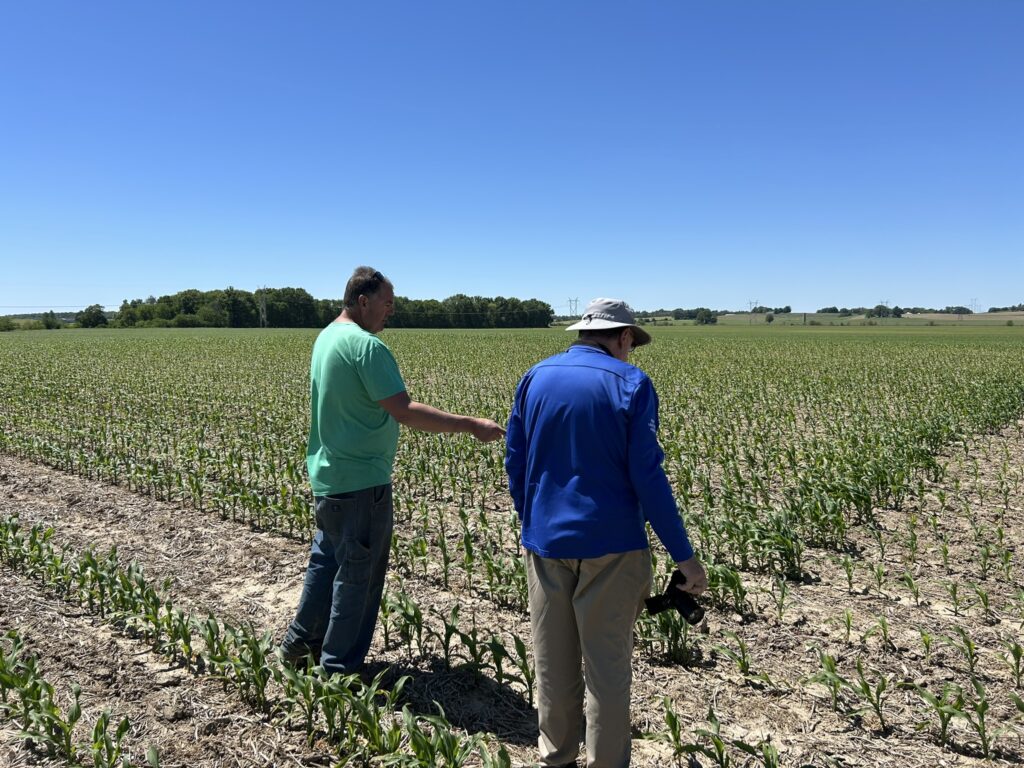
His 2×2 program includes a balanced nutritional package containing nitrogen, phosphorus, potassium, zinc, manganese, boron, iron, copper, Agri-Sweet, and Monty’s Liquid Carbon. This placement strategy positions nutrients close to the root zone while minimizing salt stress on the seed. Around the V6-V7 growth stage, Jason follows with a Y-Drop application including nitrogen, MLC, zinc, manganese, sulfur, and potash to support rapid growth and nutrient uptake.
The layered fertility approach helps maintain nutrient availability throughout the season while supporting stronger root development, plant health, and overall yield potential.
One of the most unique aspects of Jason’s program is what he is not applying: dry fertilizer. This year, Jason is testing the impact of eliminating dry fertilizer entirely and has already noticed reduced salt pressure in the root zone.
“We’re seeing less salt issues by not running dry,” Jason said. “That’s something I’ve really noticed.
Joe believes Monty’s humic technology is playing an important role in that transition.
“Humics help buffer salts, improve nutrient availability, support microbial activity, and enhance overall soil health,” Joe explained. “When you combine that with a strong fertility plan and consistent testing, you create a more sustainable farming system that performs more efficiently.”
Jason was introduced to a dry humic product several years ago by a fellow farmer. He applied more than 300#s per acre and saw no results. He has now been using Monty’s activated humic technology for three seasons and says he has seen measurable improvements in nutrient availability, especially with micronutrients like manganese.
A major reason Jason feels confident making changes is his commitment to soil and tissue testing. He strongly advocates for testing because it allows him to make decisions based on actual field conditions instead of assumptions.
“You can’t manage what you don’t measure,” Jason said. “The testing tells the story.”
Jason soil tests one field each spring on a three-year rotation, rotating between Field 1, Field 2, and Field 3, and conducts tissue testing every two weeks during the growing season. The regular monitoring helps identify deficiencies early and fine-tune in-season applications. “Jason relies on sample results like these to make informed farming decisions.”
For Jason Evans, the combination of Monty’s Plant Food, agronomic support, and a data-driven mindset is helping position his operation for the future.
“We’re learning every year,” Jason said. “But I can honestly say we’re seeing the impact in the field and our ROI.”
For more information about Jason’s testing results, reach out to Joe Dedman aquí. Learn more about Soil and Tissue testing aquí.
For more information about Monty’s programs and products contact your Representante de Monty.
The post How Monty’s Plant Food Is Helping Indiana Farmer Jason Evans Push Yield Potential and ROI appeared first on Monty's Plant Food.
]]>The post Early-Season Phosphorus Deficiency in Corn: Understanding Purple Corn at V2 appeared first on Monty's Plant Food.
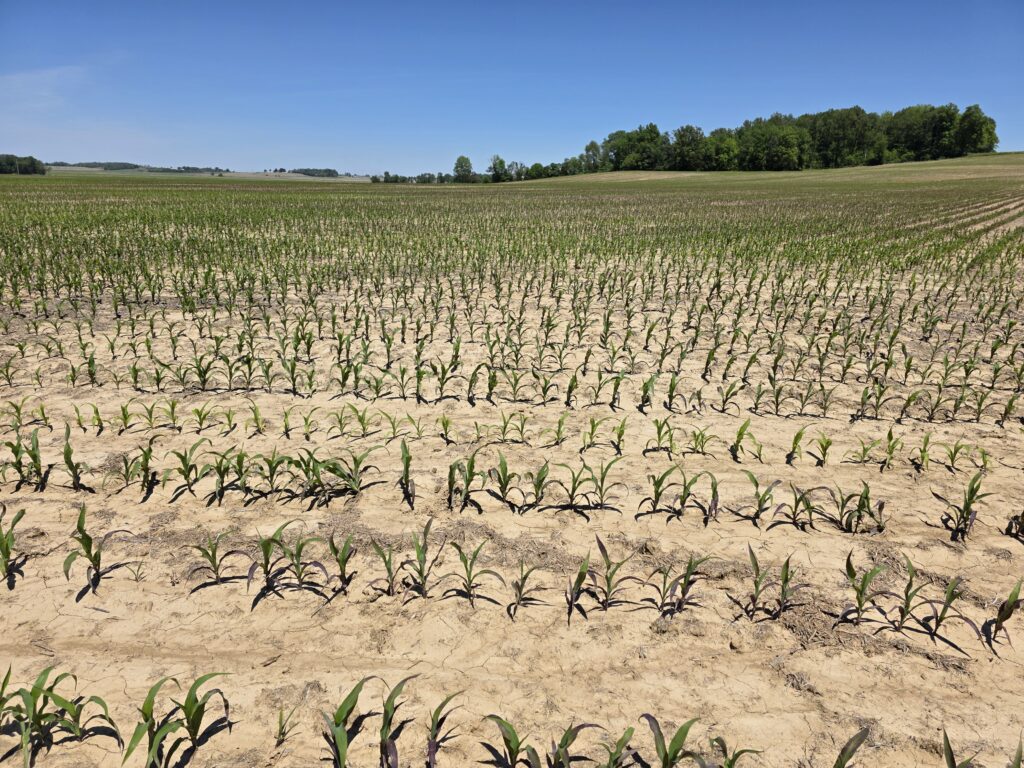
]]>The purple coloration appearing in this V2 corn field is a strong indicator of early-season phosphorus (P) deficiency. At this stage, young corn plants rely heavily on accessible phosphorus to support rapid root development, energy transfer, and early vegetative growth. When uptake is restricted, anthocyanin pigments accumulate in the leaf tissue, creating the purple to reddish-purple appearance visible on lower leaves and leaf margins.
In this field, environmental conditions are likely amplifying the issue. Dry surface soils, visible crusting, and limited moisture are reducing nutrient movement and slowing root expansion. Even in fields with adequate soil phosphorus levels, young corn can still show deficiency symptoms when roots cannot efficiently access nutrients. Early-season stress is especially common in sandy soils, compacted areas, or fields with reduced microbial activity.
Phosphorus drives several critical functions in corn production, including ATP energy transfer, root architecture, seedling vigor, and nutrient metabolism. When phosphorus availability is limited during early growth, plants often become stunted and uneven, delaying canopy development and reducing yield efficiency later in the season.
The immediate focus should be improving nutrient availability and reducing plant stress before rapid vegetative growth accelerates. Soil and tissue testing are important tools for confirming phosphorus status while identifying additional factors such as pH imbalance, compaction, or micronutrient interactions. A balanced liquid fertility program can help improve nutrient accessibility, support root growth, and maintain crop momentum during stressful growing conditions.
Monty’s Plant Food works with growers across the United States to strengthen nutrient efficiency, soil health, and plant performance through advanced liquid fertility technologies designed for high-yield production systems.
Key Agronomic Factors Contributing to Purple Corn at V2
| Agronomic Factor | Impact on Corn Growth |
| Cool soil temperatures | Slows phosphorus uptake and root activity |
| Dry or crusted soils | Restricts root expansion and nutrient movement |
| Compactación | Limits root mass and nutrient interception |
| Low phosphorus availability | Reduces energy transfer and seedling vigor |
| Poor soil biology | Decreases nutrient cycling and phosphorus efficiency |
| Zinc interaction issues | Can intensify phosphorus deficiency symptoms |
Recommended Next Steps
- Pull both soil and tissue samples immediately
- Evaluate starter fertilizer placement and phosphorus availability
- Assess soil compaction and rooting depth
- Support root development with a balanced liquid fertility program
- Monitor new growth for recovery within 7–14 days
- Work with a Monty’s Plant Food representative to build a season-long nutrient efficiency plan
Corn can recover from early phosphorus deficiency when nutrient uptake improves before rapid vegetative growth begins. The focus now should be on restoring root function, improving nutrient accessibility, and protecting yield potential during this critical developmental window.
*********************
Learn more about corn deficiencies aquí and Monty’s soil and tissue testing solutions aquí.
*********************
For additional agronomic support and nutrient management solutions, visit:
www.montysplantfood.com or contact your Representante de Monty.
References
- IPNI (International Plant Nutrition Institute) — Phosphorus Deficiency in Corn
- Purdue University Extension — Nutrient Deficiency Symptoms in Corn
- University of Minnesota Extension — Early Season Corn Nutrient Deficiencies
- Iowa State University Extension — Understanding Purple Corn Symptoms
- USDA NRCS Soil Health Principles
- Monty’s Plant Food Company — Plant Nutrition and Soil Health Resources
The post Early-Season Phosphorus Deficiency in Corn: Understanding Purple Corn at V2 appeared first on Monty's Plant Food.
]]>The post Soil and Tissue Testing in Modern Agriculture: Insights for Smarter Nutrient Management, Higher Efficiency, and Improved Profitability appeared first on Monty's Plant Food.
]]>Introduction: The Importance of Soil and Tissue Testing
Modern agriculture is no longer driven by assumptions, tradition, or uniform input programs. The margin for error has narrowed. Fertility costs have increased. Weather volatility has intensified. Yield expectations continue to rise across corn, soybeans, wheat, and specialty crop systems throughout the continental United States.
In this environment, soil and tissue testing have moved from “recommended practices” to operational requirements for any grower focused on efficiency and profitability.
Soil testing defines the nutrient foundation of the field. Tissue testing reveals what the plant is actually doing with that foundation in real time. Together, they form a feedback system that turns fertility management from reactive guesswork into controlled, measurable decision-making.
Companies like Monty’s Plant Food have built their approach around this principle: nutrients are only as valuable as their availability, timing, and uptake efficiency. Liquid fertility programs, when paired with consistent soil and tissue analysis, allow growers to adjust in-season, correct deficiencies faster, and reduce wasted input spend.
This is not theory. It is operational agronomy.
Where to Begin: An Introduction Into Soil Testing
Soil testing is the starting point for nearly every effective fertility program. It defines the chemical environment in which crops grow and sets the baseline for all nutrient recommendations. A soil test answers three foundational questions:
- What nutrients are currently present?
- What nutrients are potentially available?
- What constraints are limiting uptake?
Without these answers, fertility programs rely on generalized assumptions that rarely match field variability.
Why Soil Testing Matters in Modern Agriculture
Across U.S. production systems, soil variability is now one of the most significant hidden cost drivers. Two acres in the same field can behave like completely different environments due to:
- Historical fertilizer placement
- pH stratification
- Organic matter variability
- Drainage differences
- Tillage history
Soil testing exposes this variability. It is the first step toward precision agriculture, variable rate fertility, and data-driven agronomy.
The Cost of Growing Without Soil Testing
Skipping soil testing does not eliminate cost—it redistributes it inefficiently. Common outcomes include:
- Over-application of fertilizer in high fertility zones
- Under-application in deficient zones
- Yield ceilings due to undiagnosed pH issues
- Reduced nitrogen efficiency
- Micronutrient imbalances that go undetected until yield loss occurs
Economic Impact Overview
| Scenario | Input Strategy | Result |
| No soil testing | Uniform fertilizer application | High waste, inconsistent yield |
| Annual soil testing | Adjusted nutrient planning | Improved ROI and yield stability |
| Soil + tissue integration | Dynamic in-season correction | Maximum efficiency and yield response |
The difference is not marginal. It compounds season after season.
What Soil Testing Measures
Soil testing evaluates the soil system across three core domains: chemical, physical, and biological properties.
Chemical Properties
Chemical analysis is the most widely used component of soil testing and includes:
- Soil pH
- Macronutrients (N, P, K)
- Secondary nutrients (Ca, Mg, S)
- Micronutrients (Zn, Mn, Fe, Cu, B)
- Cation exchange capacity (CEC)
- Base saturation ratios
These parameters determine nutrient availability and chemical balance in the root zone.
Physical Properties
Physical characteristics influence how nutrients move through the soil profile:
- Texture (sand, silt, clay composition)
- Compaction levels
- Water infiltration rate
- Drainage efficiency
- Aggregate stability
A nutrient-rich soil with poor structure will still underperform.
Biological Properties
Biological activity is increasingly recognized as a core fertility driver:
- Organic matter content
- Microbial biomass
- Residue decomposition rate
- Soil respiration activity
Biology governs nutrient cycling efficiency, particularly nitrogen and sulfur mineralization.
The Role of Soil Testing in Modern Farming Systems
Soil testing is no longer a static pre-season exercise. It is a decision-support tool embedded in precision agriculture systems.
Precision Agriculture Optimization
Soil test data feeds directly into:
- GPS-guided application maps
- Variable rate fertilizer prescriptions
- Zone management strategies
Input Optimization
Fertilizer is one of the largest input costs in row crop production. Soil testing reduces inefficiency by:
- Eliminating unnecessary applications
- Targeting deficient zones
- Improving nutrient use efficiency
Risk Management
Soil testing reduces agronomic uncertainty by identifying:
- pH limitations before planting
- Nutrient deficiencies before emergence
- Toxicity risks from over-application
Soil Testing Best Practices
Proper sampling technique determines the reliability of results. Poor sampling produces misleading data regardless of lab quality.
Number of Samples
General guideline:
- 1 composite sample per 10–20 acres (uniform fields)
- 1 composite per 2–5 acres (variable fields)
Sampling Depth
- Row crops: 0–6 inches standard
- Deep nitrate testing: 0–12 or 0–24 inches depending on crop and region
Sampling Patterns
Common methods:
- Zig-zag pattern (most widely used)
- Grid sampling (precision agriculture systems)
- Zone sampling (management zones)
Avoiding Contaminated Areas
Do NOT sample:
- Fence lines
- Manure piles
- Old burn areas
- Field edges
- Tire tracks or equipment lanes
Proper Handling
- Mix subsamples thoroughly
- Air dry if required
- Label clearly by field and zone
- Ship promptly to lab
Sampling Pattern Illustration
Field Boundary
+———————————–+
| X X X X X X X |
| X X X X X X |
| X X X X X X X |
| X X X X X X |
+———————————–+
X = Soil sampling points (zig-zag pattern)
Types of Soil Tests
Not all soil tests are designed for the same objective. Selecting the correct test type is critical.
Routine Fertility Test
Most common baseline test including:
- pH
- P, K levels
- Organic matter
- CEC
- Secondary nutrients
Used for annual fertility planning.
Complete Soil Health Test
More advanced analysis including:
- Biological activity indicators
- Aggregate stability
- Respiration metrics
- Expanded micronutrient profile
Often used in regenerative or long-term soil improvement systems.
Specialized Tests
Used for specific constraints:
- Nitrate testing (in-season nitrogen management)
- Salinity testing
- Sodicity evaluation
- Contamination or heavy metal screening
Soil Test Comparison Chart
| Test Type | Purpose | Frequency | Cost Level | Value |
| Routine fertility | Baseline nutrient planning | Annual | Low | High |
| Soil health test | System evaluation | 2–3 years | Medium-High | Very High |
| Specialized tests | Targeted diagnosis | As needed | Variable | Critical in problem fields |
Haga clic en aquí to learn more about the different types of tests available.
Interpreting Soil Test Results
Soil test interpretation is where data becomes actionable agronomy.
Key Metrics
pH
Soil pH controls nutrient availability more than almost any other factor.
- Low pH (<5.5): limits calcium, magnesium, phosphorus availability
- High pH (>7.5): restricts micronutrients like zinc and iron
Nutrient Levels
Measured in pounds per acre or index values. Interpretation depends on:
- Crop type
- Yield goal
- Soil texture
Base Saturation
Represents the percentage of soil exchange sites occupied by key cations:
- Calcium
- Magnesio
- Potassium
- Hydrogen
Balancing ratios improves nutrient efficiency and soil structure.
Cation Exchange Capacity (CEC)
CEC measures the soil’s ability to hold nutrients.
- Low CEC soils (sandy): require more frequent, smaller nutrient applications
- High CEC soils (clay/organic rich): hold nutrients longer but may lock them up
Turning Data Into Action
Soil testing only creates value when translated into management decisions.
Fertility Planning
Key actions include:
- Lime application to correct pH
- Phosphorus and potassium build programs
- Micronutrient correction strategies
- Sulfur management in high-demand crops
Variable Rate Application
Precision fertility allows:
- Zone-based fertilizer prescriptions
- Reduced overlap and waste
- Improved yield consistency across field variability
Monty’s Plant Food liquid fertility systems are often used in-season to fine-tune these programs when soil conditions or crop uptake deviate from expectations.
Long-term Soil Building
Soil fertility is not static. It is a moving system influenced by management, crop rotation, and environmental conditions.
Organic Matter Changes
Organic matter is both a nutrient reservoir and a biological engine. Increases improve:
- Water retention
- Nutrient buffering
- Microbial activity
pH Shifts
pH changes occur gradually but have major impact:
- Acidification from nitrogen fertilizers
- Liming effects from calcium amendments
Nutrient Depletion or Buildup
Without testing:
- Potassium buildup in high-manure systems
- Phosphorus stratification in no-till systems
- Micronutrient depletion in intensive cropping systems
Frequency of Soil Testing
General Guidelines
- Standard recommendation: every 2–3 years per field
- High-value crops: annually
- Problem fields: every season
Early Planting Season
Used for:
- Fertility planning
- Lime application decisions
- Pre-plant fertilizer adjustments
In-Season
Less common for soil, but used for:
- Nitrate tracking
- Sulfur monitoring
End of Season
Used to:
- Evaluate nutrient removal
- Adjust long-term fertility plans
Economics of Soil Testing
Soil testing is one of the highest-return agronomic investments available.
Cost vs Return
Typical soil test cost:
- $10–$25 per sample (routine)
Potential return:
- 5–15% fertilizer savings
- Yield increases from corrected deficiencies
- Improved nutrient use efficiency
Example ROI Drivers
| Factor | Economic Impact | |
| Corrected pH | +5–20% yield potential recovery | |
| Optimized P & K | Reduced over-application costs | |
| Precision zoning | Input savings + yield stability | |
| Micronutrient correction | prevents hidden yield loss | |
Positioning Soil Testing as a Strategic Advantage
Soil testing should not be viewed as a compliance task or annual checkbox. It functions as:
- A strategic planning tool
- A continuous improvement system
- A foundational dataset for in-season tissue analysis
Without soil testing, tissue testing loses context. Without tissue testing, soil testing lacks real-time validation. Monty’s Plant Food integrates into this system by focusing on nutrient availability and uptake efficiency—bridging the gap between what is in the soil and what the plant can actually use.
Tissue Testing: The In-Season Reality Check
While soil testing defines potential, tissue testing defines performance. Tissue analysis measures nutrient concentrations directly within plant tissue, typically leaf or stalk samples. It provides real-time feedback on:
- Nutrient uptake efficiency
- Hidden deficiencies
- Antagonisms between nutrients
- Environmental stress impacts on nutrient flow
In-season tissue testing allows growers to adjust fertility programs while the crop is still able to respond.
Geography and Its Impact on Testing Strategy
Soil and tissue testing protocols vary significantly across U.S. geography due to differences in:
- Climate
- Soil parent material
- Crop systems
- Rainfall patterns
- Temperature regimes
Northern U.S. (Corn Belt, Upper Midwest)
- Higher organic matter soils
- Strong response to nitrogen and sulfur management
- Soil testing typically every 2–3 years
Southern U.S.
- Faster nutrient depletion
- Acidification risk higher
- More frequent liming programs required
Western U.S.
- Irrigated systems dominate
- Salinity and sodium management are key
- Specialized soil testing for salts and water quality
Implication for Testing Frequency
Regions with higher rainfall or intensive cropping systems generally require:
- More frequent testing
- More in-season tissue sampling
- Greater emphasis on micronutrients
Summary
Soil and tissue testing form the backbone of modern agronomic decision-making. Soil testing establishes the nutrient framework of the field. Tissue testing validates how that framework is performing in real time.
When used together, they eliminate guesswork, reduce input waste, and improve yield consistency across variable field conditions.
For producers operating in high-efficiency systems, these tools are not optional diagnostics—they are core components of profitability management.
Companies like Monty’s Plant Food continue to emphasize that fertility programs must be adaptive. Nutrient availability, not just nutrient application, determines outcome. Soil and tissue testing provide the intelligence layer required to make that distinction actionable.
The direction of modern agriculture is clear: fewer assumptions, more data, faster correction cycles, and tighter alignment between soil conditions and plant demand.
To turn soil test data into actionable management decisions, connect with your Representante de Monty to build a fertility and soil testing program aligned with your operation. A well-structured approach transforms soil analysis from a snapshot of conditions into a practical tool for improving yield potential and strengthening return on investment.
References (Educational and Industry Sources)
- USDA Natural Resources Conservation Service (NRCS) Soil Health and Soil Testing Resources
- University Extension Systems (Cornell, Iowa State, University of Illinois, Ohio State) Soil Fertility Publications
- Land Grant University Agronomy Research Summaries (Midwest and Southern U.S.)
- American Society of Agronomy (ASA) Soil Fertility and Nutrient Management Guidelines
- Soil Science Society of America (SSSA) Educational Materials
- Standard Agricultural Soil Testing Laboratory Protocols (Midwest Labs, Waters Agricultural Labs methodologies)
- Monty’s Plant Food internal agronomy and product application principles (www.montysplantfood.com)
The post Soil and Tissue Testing in Modern Agriculture: Insights for Smarter Nutrient Management, Higher Efficiency, and Improved Profitability appeared first on Monty's Plant Food.
]]>The post Soil and Tissue Testing Methods in Modern Agriculture: A Practical Guide appeared first on Monty's Plant Food.
]]>Modern agriculture does not fail on a lack of inputs. It fails on inefficient placement, incomplete understanding of soil biology, and reactive nutrient management.
Across the continental United States, producers are operating under tighter margins, higher yield expectations, and more variable weather patterns than any previous generation. In this environment, soil and tissue testing is no longer a “best practice” checkbox. It is a production control system.
Soil testing answers one question: what is in the soil and what is potentially available?
Tissue testing answers a different question: what is the plant actually taking up right now?
Those are not interchangeable diagnostics. They are complementary systems that, when used together, define fertility strategy, in-season corrections, and return-on-input decisions.
Within U.S. agriculture, several testing methodologies dominate the conversation:
- Mehlich-3 Soil Test
- Haney Soil Health Test
- Total Digestion Soil Test
- BCR (Biological/Carbon/Regenerative) Framework-based testing systems
- Additional tissue and diagnostic testing options (standard tissue analysis, sap testing, nitrate testing, etc.)
Each system answers a different layer of soil and plant function. Each has limitations. Each has a place in a disciplined fertility program.
Companies like Monty’s Plant Food have built their approach around one central principle: agronomic decisions improve when soil chemistry, biology, and plant physiology are viewed as a connected system rather than isolated snapshots.
This article breaks down the major testing methods used across U.S. agriculture, how they differ, when they should be used, and how producers can apply results to improve yield efficiency and fertilizer ROI.
Soil and Tissue Test Method Overview
Before diving into individual systems, it helps to establish a baseline comparison.
Core Testing Categories in U.S. Agriculture
| Category | What It Measures | Primary Use |
| Standard Soil Chemistry Tests | Extractable nutrients (P, K, Ca, Mg, micronutrients) | Fertility planning |
| Soil Health Tests | Biological activity, organic carbon, respiration | Regenerative and long-term soil function |
| Total Elemental Tests | Total nutrient pool (available + unavailable) | Long-term nutrient reservoir analysis |
| Plant Tissue Tests | Nutrient uptake at time of sampling | In-season correction |
| Sap/Nitrate Tests | Real-time nutrient flow | Rapid response management |
The difference between these systems is not accuracy alone. It is intent. Each test is designed around a different agronomic question.
Mehlich-3 Soil Test
What It Is Known For
The Mehlich-3 soil test is the most widely used extractant method across the Midwest, Northeast, and much of the U.S. corn and soybean belt. It is a multi-nutrient chemical extraction procedure designed to estimate plant-available nutrients in mineral soils.
It is commonly run by laboratories such as Midwest-based and university-affiliated soil testing labs, including Waters Agricultural Laboratories y Midwest Laboratories.
Features & Benefits
- Measures multiple nutrients in one extraction (P, K, Ca, Mg, Zn, Mn, Cu, Fe, B)
- Fast turnaround time (typically 3–7 days)
- Cost-effective for large-acreage operations
- Well-calibrated to university fertilizer recommendations
- Strong historical dataset for yield response correlations
What Separates Mehlich-3 From Other Tests
The key distinction is chemical extraction strength and calibration history.
Mehlich-3 is designed to simulate nutrient availability under acidic extraction conditions. It does not measure total soil nutrients. It does not measure biological activity. It does not reflect microbial mineralization.
It answers a narrow but important question:
What portion of nutrients is likely available for plant uptake under current soil chemistry conditions?
That precision—and limitation—is what makes it reliable.
Cost (Typical U.S. Range)
- Basic Mehlich-3 panel: $12–$25 per sample
- With organic matter and buffer pH: $20–$35 per sample
- Micronutrient expansion panels: $30–$50 per sample
How to Read the Test
Key columns generally include:
- Phosphorus (P) – ppm
- Potassium (K) – ppm
- Calcium (Ca) – ppm
- Magnesium (Mg) – ppm
- Soil pH
- Buffer pH (lime requirement indicator)
- Organic matter %
Interpretation is based on sufficiency ranges, not raw numbers alone.
Example:
| Nutrient | Low Range | Optimal Range | High Range |
| P (ppm) | <15 | 20–40 | >60 |
| K (ppm) | <120 | 150–250 | >300 |
Test Sample Example
A corn field sample from central Ohio might return:
- P: 28 ppm (adequate)
- K: 185 ppm (adequate)
- OM: 3.2%
- pH: 6.4
Interpretation: fertility is balanced, but yield response will depend more on nitrogen efficiency and in-season nutrient availability than baseline soil deficiencies.
When to Use Mehlich-3
- Pre-season fertility planning
- Standard agronomic programs (corn, soybeans, wheat)
- Fields with established yield history
- When cost efficiency across acreage matters
It is not designed to diagnose soil biology or carbon cycling. It is a chemistry-first tool.
Haney Soil Health Test
What It Is Known For
The Haney Test, developed through USDA-ARS research, is designed to evaluate soil health, biological activity, and plant-available nutrients driven by microbial processes.
It is widely used in regenerative agriculture systems and grazing-based operations.
Features & Benefits
- Measures water-extractable carbon (WEOC)
- Measures water-extractable nitrogen (WEON)
- Soil respiration (CO₂ burst)
- Organic nitrogen contribution estimates
- Nutrient availability influenced by biology
What Separates Haney From Other Tests
The Haney Test shifts the focus from static chemistry to biologically driven nutrient cycling. Traditional tests assume nutrients are chemically available or not. Haney introduces a third dimension: How actively is soil biology converting organic matter into plant-available nutrients? This is particularly relevant in reduced-tillage, cover crop, and manure-driven systems.
Cost (Typical U.S. Range)
- Standard Haney test: $45–$80 per sample
- Expanded biological panels: $75–$120 per sample
How to Read the Test
Key metrics:
- Soil Health Calculation (SHC score)
- Water-extractable organic carbon (WEOC)
- Water-extractable organic nitrogen (WEON)
- Soil respiration (CO₂ flush)
- Nitrate-N
A higher SHC score generally indicates stronger biological function and nutrient cycling efficiency.
Test Sample Example
- SHC Score: 18 (moderate)
- WEOC: 180 ppm
- Respiration: moderate
- Nitrate: low–moderate
Interpretation: soil biology is active but not fully supporting crop nitrogen demand. Supplemental nitrogen efficiency strategies may be required.
When to Use Haney
- Regenerative agriculture systems
- Cover crop rotations
- Reduced synthetic fertilizer programs
- Fields transitioning to biological management
- Diagnosing nutrient release inefficiency
Total Digestion Soil Test
What It Is Known For
Total Digestion testing measures the entire nutrient pool within the soil matrix, not just what is currently plant-available.
This includes nutrients locked in mineral structures, organic matter, and unavailable fractions.
Features & Benefits
- Measures total elemental concentration
- Provides long-term fertility reservoir insight
- Useful for mining nutrient capacity of soil
- Helps evaluate depletion vs replenishment cycles
What Separates Total Digestion From Other Tests
Where Mehlich-3 measures availability, Total Digestion measures capacity.
It answers:
What nutrients exist in the soil system regardless of current availability?
This makes it useful for long-term soil investment planning but less useful for immediate fertilizer decisions.
Cost (Typical U.S. Range)
- Standard total digestion panel: $60–$120 per sample
- Expanded trace element analysis: $100–$180 per sample
How to Read the Test
Results are expressed as total elemental concentrations:
- Total P
- Total K
- Total Ca
- Total Mg
- Total Fe, Zn, Mn, Cu
These numbers are significantly higher than extractable tests and require interpretation through mineralization potential models.
Test Sample Example
- Total K: 15,000 ppm
- Mehlich K: 180 ppm
Interpretation: large nutrient reserve exists, but plant availability is constrained by soil chemistry and biological cycling.
When to Use Total Digestion
- Soil rehabilitation projects
- Long-term fertility benchmarking
- Reclamation or newly acquired land
- Research-based fertility planning
- Diagnosing “hidden fertility”
BCR Framework (Biological-Carbon-Residue Regenerative Assessment Systems
What It Is Known For
The BCR Framework represents a systems-based soil evaluation approach, commonly used in regenerative agriculture and soil health consulting models. Rather than relying on a single extraction method, it integrates:
- Biological indicators
- Carbon cycling metrics
- Residue breakdown performance
- Nutrient flow efficiency
Features & Benefits
- Multi-layer soil function assessment
- Focus on carbon-to-nitrogen dynamics
- Residue decomposition tracking
- Biological efficiency scoring
- Integrates field observations with lab data
What Separates BCR From Other Tests
It is not a single lab test. It is a decision framework. Where Mehlich-3 and Haney provide data points, BCR-style systems interpret: How efficiently is the soil converting biomass into plant-available nutrition over time? This is particularly relevant in no-till systems, high-residue corn, and cover crop rotations.
Cost (Typical U.S. Range)
- Framework-based assessments: $50–$150 per acre equivalent evaluation
- Often bundled with consulting programs rather than standalone lab tests
How to Read the Test
Outputs are typically categorized rather than numeric:
- Carbon function: low / moderate / high
- Residue breakdown efficiency
- Biological conversion rate
- Nutrient cycling balance index
Test Sample Example
- Carbon cycling: high
- Residue breakdown: moderate
- Nitrogen tie-up risk: elevated
Interpretation: high residue system may temporarily immobilize nitrogen without supplemental biological or foliar support.
When to Use BCR Framework
- Regenerative transition systems
- High-residue corn and wheat systems
- Cover crop integration planning
- Soil function diagnostics beyond chemistry
Other Soil and Tissue Testing Options Growers Use
Modern crop management increasingly relies on combining multiple diagnostic systems.
1. Standard Tissue Testing (Dry Matter Analysis)
- Measures total nutrient concentration in plant tissue
- Typically used during key growth stages (V5, VT, R1 in corn)
- Common in corn, soybean, wheat, alfalfa systems
Cost: $30–$60 per sample
2. Sap Testing (In-Season Diagnostics)
- Measures soluble nutrients in plant sap
- Rapid feedback (24–48 hours in some labs)
- Highly sensitive to nutrient shifts
Cost: $40–$90 per sample
3. Nitrate Testing (Pre-Sidedress or In-Season Nitrogen Management)
- Measures nitrate-N in soil or tissue
- Critical for corn nitrogen timing decisions
Cost: $15–$40 per sample
4. Micronutrient-Specific Panels
- Zinc, boron, manganese focus
- Often paired with soil and tissue programs
Cost: $25–$70 per sample
Comparative Summary Chart
| Test Type | Primary Focus | Strength | Limitation | Best Use Case |
| Mehlich-3 | Plant-available nutrients | Cost-effective, reliable | No biology | Base fertility planning |
| Haney | Soil health & biology | Biological insight | Higher cost, variability | Regenerative systems |
| Total Digestion | Total nutrient pool | Long-term nutrient reserve | No availability context | Soil benchmarking |
| BCR Framework | Soil function systems | Holistic interpretation | Not a single lab test | Regenerative transition |
| Tissue Testing | Plant uptake status | Real-time crop status | Lag behind soil changes | In-season correction |
| Sap Testing | Immediate nutrient flow | Rapid feedback | Highly sensitive | Emergency diagnostics |
How Monty’s Plant Food Fits Into Modern Soil and Tissue Testing Systems
Soil and tissue testing only matter when they change decisions in the field. That is where Monty’s Plant Food positions itself in the production system—not as a replacement for soil fertility programs, but as a bridge between soil conditions and plant uptake efficiency.
Across U.S. row crop agriculture, one of the most consistent gaps is not nutrient supply—it is nutrient utilization. Soil tests may show adequate levels, yet tissue tests often reveal deficiencies under stress conditions (heat, drought, compaction, or biological limitation).
Monty’s liquid fertility approach is designed to support:
- Nutrient uptake efficiency
- Plant stress recovery
- In-season metabolic activity
- Compatibility with soil-applied fertility programs
When paired with soil and tissue testing programs, liquid fertility becomes a corrective layer rather than a guessing tool.
The practical takeaway for producers is simple:
Soil tests define what should be available. Tissue tests define what is available. Plant nutrition products influence what is actually used.
The value is in closing that gap.
Practical Integration: Building a Testing Strategy That Actually Works
High-performing operations rarely rely on one test type. They stack diagnostics:
Pre-Season
- Mehlich-3 soil testing for fertility planning
- Optional Total Digestion for long-term fields
Mid-Season
- Tissue testing at key growth stages
- Sap testing for rapid correction
Post-Harvest / Long-Term
- Haney or BCR framework assessments
- Organic matter and carbon tracking
This layered system moves management from reactive to predictive.
Key Industry Insight
The direction of U.S. agriculture testing is not toward fewer tools. It is toward integration. Chemistry alone is no longer sufficient. Biology alone is incomplete. Plant analysis without soil context leads to misdiagnosis. The most profitable operations are building systems that connect all three:
- Soil chemistry (Mehlich-3, Total Digestion)
- Soil biology (Haney, BCR systems)
- Plant physiology (Tissue and sap testing)
Conclusion: Testing Is Only Valuable When It Changes Action
Soil and tissue testing are often treated as reporting tools. In reality, they are decision engines. A Mehlich-3 report without interpretation is data. A Haney test without management change is documentation. A tissue test without correction strategy is hindsight. The objective is not more testing. It is better alignment between soil capacity, biological activity, and plant demand.
Producers who treat testing as a system—not a snapshot—consistently reduce input waste, stabilize yield variability, and improve nutrient efficiency across the season. That is where modern fertility management is headed. And that is where companies like Monty’s Plant Food continue to position themselves—at the intersection of soil data, plant response, and field-level execution.
To move from data to decisions, connect with your Monty’s Plant Food representative to build a soil testing and fertility program tailored to your operation. A well-structured plan turns soil test results into actionable fertility decisions that support yield potential, improve nutrient efficiency, and strengthen return on investment across every acre.
References (Domestic Agricultural Sources and Institutions)
- USDA Agricultural Research Service (ARS) soil health and nutrient cycling research publications
- University Extension Services (Ohio State University Extension, Iowa State University Extension, University of Illinois Extension, Kansas State University Extension)
- Midwest Laboratories agronomic testing methodologies and interpretation guides
- Waters Agricultural Laboratories soil and plant tissue testing reference materials
- Soil Science Society of America (SSSA) publications on soil chemistry and biological testing methods
- U.S. EPA soil nutrient and environmental interaction reference frameworks
- NRCS Soil Health Technical Notes and Field Guides
- Peer-reviewed agronomy journals covering Mehlich-3 extraction calibration and Haney soil health methodology development
The post Soil and Tissue Testing Methods in Modern Agriculture: A Practical Guide appeared first on Monty's Plant Food.
]]>The post Soil Testing in Modern Agriculture: A Strategic Framework for Yield, Efficiency, and Profitability appeared first on Monty's Plant Food.
]]>Soil testing is no longer a supplemental agronomic practice—it is the foundation of modern crop production strategy. In a production environment defined by tight margins, volatile input costs, and increasing yield expectations, the ability to accurately quantify what is happening beneath the soil surface determines profitability before a single seed is planted.
At its core, soil testing translates the complexity of soil systems into actionable data. It reveals nutrient availability, soil chemistry constraints, and structural limitations that directly influence crop performance. Without it, fertility programs rely on assumption. With it, they become engineered systems.
For producers across the continental United States—whether managing corn in Iowa, wheat in Kansas, cotton in Texas, or specialty crops in California—soil testing is the first decision point in the season. Everything else builds from it.
Monty’s Plant Food operates within this same principle: precision before application. Soil testing is the control mechanism that ensures every input has intent.
Where to Begin: An Introduction Into Soil Testing
Soil testing begins with a fundamental shift in mindset: soil is not uniform, and fertility is not static. Fields vary in texture, biology, compaction, organic matter, and nutrient cycling. A single composite sample is not a guarantee of uniformity—it is a calculated approximation.
A proper soil test begins with:
- Field stratification (zones, management history, soil types)
- Consistent sampling methodology
- Representative sample collection
- Reliable laboratory analysis
Why Soil Testing Matters in Modern Agriculture
Modern agriculture has moved beyond blanket fertilizer applications. The emergence of precision agriculture, variable rate technology, and biological soil amendments has made soil testing essential infrastructure.
Key drivers include:
- Rising fertilizer costs (nitrogen, phosphorus, potassium volatility)
- Increased yield targets per acre
- Environmental compliance and nutrient loss reduction
- Soil degradation and long-term productivity concerns
Soil testing provides the baseline from which all fertility decisions are made. Without it, producers operate blind to nutrient imbalances that may already be limiting yield potential.
The Cost of Growing Without Soil Testing
Skipping soil testing is not a cost-saving decision—it is a risk transfer decision. It transfers risk from managed input strategy to unpredictable yield outcomes.
Common consequences include:
- Over-application of fertilizer (wasted input cost)
- Under-application of key nutrients (yield loss)
- Misdiagnosis of soil pH issues
- Inefficient use of nitrogen
- Reduced nutrient use efficiency (NUE)
A conservative estimate across Midwest row crop systems suggests yield losses of 5–20 bushels per acre in corn when fertility is misaligned. At current market values, that margin loss exceeds the cost of soil testing by multiple factors.
Soil testing is inexpensive insurance against systemic inefficiency.
What Soil Testing Measures
Soil testing evaluates three primary domains of soil function:
1. Chemical Properties
Chemical indicators define nutrient availability and soil reaction.
Key measurements include:
- pH
- Macronutrients (N, P, K)
- Secondary nutrients (Ca, Mg, S)
- Micronutrients (Zn, Mn, Fe, Cu, B)
- Cation exchange capacity (CEC)
These parameters determine whether nutrients are accessible or locked within the soil matrix.
2. Physical Properties
Physical soil characteristics govern water movement, root penetration, and aeration.
Key indicators:
- Texture (sand, silt, clay composition)
- Bulk density
- Infiltration rate
- Compaction layers
Physical constraints often limit yield even when fertility levels appear adequate.
3. Biological Properties
Biology drives nutrient cycling, organic matter decomposition, and soil resilience.
Key indicators:
- Microbial activity
- Organic matter content
- Soil respiration
- Enzyme activity (in advanced tests)
Biological function is increasingly recognized as a key driver of nutrient efficiency.
The Role of Soil Testing in Modern Farming Systems
Precision Agriculture Optimization
Soil testing enables zone-based fertility mapping and variable rate application (VRA). This ensures nutrients are applied where they are needed, not uniformly across variable landscapes.
Input Optimization
Fertilizer efficiency improves when soil constraints are known. Soil testing allows producers to:
- Reduce over-application
- Target nutrient deficiencies
- Improve return on investment per acre
Risk Management
Soil testing reduces uncertainty in crop planning. It stabilizes input decisions and minimizes yield variability caused by unseen nutrient constraints.
Soil Testing Best Practices
Accurate results depend on sampling integrity. Poor sampling technique is the most common source of misdiagnosis.
Number of Samples
- 1 composite sample per 10–20 acres (general guideline)
- Smaller grids for precision agriculture zones
Sampling Depth
- Standard: 0–6 inches (no-till systems may adjust)
- Subsoil sampling (6–24 inches) for nitrate evaluation
Sampling Patterns
- Zig-zag or grid sampling
- Consistent spatial distribution across management zones
Avoiding Contaminated Areas
Avoid:
- Field edges
- Old manure piles
- Burn piles
- Equipment loading zones
Where NOT to Sample
- Wet spots
- Eroded gullies
- Fertilizer bands
- Recently limed areas (unless targeted study)
Proper Handling
- Clean tools between fields
- Use plastic buckets (not galvanized metal)
- Air dry samples if delayed
- Ship promptly to laboratory
Types of Soil Tests
Routine Test
A standard agronomic soil test typically includes:
- pH
- P, K, Ca, Mg
- Organic matter
- CEC estimation
This is the foundation of fertility planning.
Complete Soil Health Test
More advanced testing includes:
- Biological activity metrics
- Aggregate stability
- Active carbon
- Respiration indicators
These tests are often used in regenerative and reduced-tillage systems.
Specialized Tests
Used for specific concerns:
- Nitrate testing (in-season nitrogen tracking)
- Salinity (EC levels)
- Micronutrient panels
- Compaction and infiltration diagnostics
Interpreting Soil Test Results
Soil test interpretation is where data becomes decision-making.
Understanding Key Metrics
pH

- Ideal range: 6.0–7.0 for most row crops
- Controls nutrient availability
- Impacts microbial activity
Nutrient Levels
Reported as lb/acre or ppm.
Interpretation depends on:
- Crop removal rates
- Yield goals
- Soil type and buffering capacity
Base Saturation
Represents the percentage of soil exchange sites occupied by Ca, Mg, K, and Na.
Key insight:
- High Ca improves structure
- Excess K can suppress Mg uptake
CEC (Cation Exchange Capacity)

- Measures soil’s ability to hold nutrients
- High CEC = greater nutrient buffering
- Low CEC = greater leaching risk
Turning Data Into Action
Fertility Planning
Soil test results directly guide:
- Lime applications
- Fertilizer blend selection
- Nutrient timing strategies
Variable Rate Application
Soil data integrates into:
- Prescription maps
- Zone management
- Site-specific nutrient delivery
This is where soil testing transitions from analysis to execution.
Long-term Soil Building
Organic Matter Changes
Organic matter improves:
- Water holding capacity
- Nutrient retention
- Biological activity
Even small increases have compounding effects over time.
pH Shifts
pH drift occurs due to:
- Nitrogen fertilizer use
- Crop removal
- Rainfall leaching
Monitoring prevents long-term fertility imbalance.
Nutrient Depletion or Buildup
Without testing, nutrients often trend toward imbalance:
- Phosphorus buildup in livestock regions
- Potassium depletion in high-yield systems
Frequency of Soil Testing
General Guidelines
- Every 2–3 years (minimum baseline)
- Annually in high-value or intensively managed systems
Early Planting Season
Used for:
- Lime planning
- Base fertilizer decisions
In-Season
Used for:
- Nitrogen management
- Tissue test correlation
End of Season
Used for:
- Yield analysis
- Next-year planning
Economics of Soil Testing
Cost vs Return
Typical soil test cost: low per acre relative to fertilizer spend.
Return drivers:
- Reduced over-application
- Improved yield consistency
- Lower nutrient waste
Example ROI Drivers
- Avoiding 20 lb excess nitrogen per acre
- Preventing yield loss from pH mismanagement
- Improving phosphorus efficiency
Even conservative estimates show soil testing pays for itself multiple times over.
Positioning Soil Testing as a Strategic Advantage
Strategic Tool
Soil testing is not reactive—it is predictive. It informs decisions before planting begins.
Continuous Improvement System
Repeated testing builds a multi-year dataset:
- Tracks soil trends
- Measures management impact
- Refines fertility efficiency
Foundation for Tissue Testing
Soil testing establishes baseline availability. Tissue testing confirms uptake. Together, they form a closed-loop system of nutrient management.
Deficiencies from Results
Types of Deficiencies
- Macronutrient deficiencies (N, P, K)
- Secondary nutrient deficiencies (Ca, Mg, S)
- Micronutrient deficiencies (Zn, Mn, B, Fe)
Solutions to Address Deficiencies
- Soil-applied fertilizers
- Foliar feeding programs
- pH correction (lime or acidification)
- Improved nutrient placement strategies
How Monty’s Plant Food Helps Address Soil Deficiencies
Monty’s Plant Food products are designed to complement soil test results by improving nutrient availability and plant uptake efficiency rather than simply increasing nutrient load.
Key functional roles include:
- Enhancing nutrient mobility in the soil profile
- Supporting microbial activity linked to nutrient cycling
- Improving root uptake efficiency under stress conditions
- Increasing responsiveness of applied fertility programs
In practical terms, when soil tests identify marginal availability—especially in phosphorus, potassium, or micronutrient-limited environments—liquid biological enhancement tools can improve utilization efficiency of existing soil nutrients.
Monty’s approach aligns with a broader agronomic shift: maximizing what is already in the soil before increasing synthetic input dependence.
Does Geography Impact Soil Testing?
Yes. Geography significantly influences both test selection and timing.
Corn Belt (IA, IL, IN, OH)
- High focus on P and K management
- Regular pH correction with lime
- Heavy reliance on grid sampling in precision systems
Great Plains (KS, NE, Dakotas)
- Nitrogen and moisture interaction critical
- Organic matter often lower
- Subsoil nitrate testing important
Southeast (GA, AL, MS)
- Strong pH buffering issues (acid soils)
- Micronutrient deficiencies more common
- Higher rainfall increases leaching risk
Western US (CA, CO, WA)
- Salinity and irrigation water quality concerns
- Specialty crop nutrient precision required
- Higher reliance on advanced soil health testing
Timing and test type must match regional constraints. Soil testing is not universal in application—it is site-specific by design.
Summary
Soil testing is the structural backbone of modern agronomy. It defines how efficiently nutrients are used, how effectively yields are protected, and how consistently farms perform across seasons.
Producers who integrate soil testing into their operational framework gain three advantages:
- Reduced input waste
- Improved yield stability
- Long-term soil health improvement
When combined with complementary technologies—such as tissue testing, precision application systems, and biological fertility solutions—soil testing becomes more than a diagnostic tool. It becomes a management system.
Monty’s Plant Food Company operates within that system philosophy: efficient nutrition is not about more input, but smarter input. Soil testing is where that intelligence begins.
To move from data to decisions, contact your Monty’s Plant Food representative to develop a soil testing and fertility plan tailored to your operation. The right strategy turns soil testing into a clear driver of yield potential and stronger ROI.
References (Educational & Agricultural Sources)
- USDA Natural Resources Conservation Service (NRCS) Soil Health Division
- Extension services from land-grant universities (Iowa State University, University of Illinois, Purdue University, Ohio State University)
- Soil Science Society of America (SSSA) publications
- USDA Economic Research Service fertilizer use reports
- Agronomic research literature on cation exchange capacity, soil pH dynamics, and nutrient cycling
- FAO (Food and Agriculture Organization) soil management resources
- Monty’s Plant Food Company agronomic and product application frameworks (www.montysplantfood.com)
The post Soil Testing in Modern Agriculture: A Strategic Framework for Yield, Efficiency, and Profitability appeared first on Monty's Plant Food.
]]>The post The Importance Of Soil and Tissue Sampling For Crops appeared first on Monty's Plant Food.
]]>1. Nutrient Management
Effective nutrient management is fundamental to crop productivity and sustainability. Soil and tissue sampling play a crucial role in determining the nutrient needs of crops.
Soil Sampling for Nutrient Availability
Soil sampling involves collecting soil samples from different parts of a field to analyze nutrient levels. This analysis provides information on the availability of essential nutrients such as nitrogen (N), phosphorus (P), potassium (K), and micronutrients. By understanding the nutrient status of the soil, farmers can tailor their fertilization programs to meet the specific needs of their crops, avoiding over- or under-application of fertilizers.
For instance, soil tests can identify deficiencies or toxicities in nutrient levels, allowing for precise adjustments in fertilizer application. This targeted approach ensures that crops receive the right amount of nutrients at the right time, promoting optimal growth and yield.
Tissue Sampling for Nutrient Uptake
Tissue sampling involves analyzing plant tissues, such as leaves, stems, or petioles, to determine the actual nutrient uptake by the plant. This method complements soil sampling by providing a snapshot of the plant’s nutritional status. Tissue analysis helps identify nutrient imbalances or deficiencies that may not be apparent from soil tests alone.
For example, a soil test might indicate sufficient levels of phosphorus, but tissue analysis could reveal that the plant is not absorbing enough of this nutrient due to factors such as soil pH or root health. By combining soil and tissue sampling data, farmers can make more informed decisions about fertilization and other management practices.
2. Soil Health Assessment
Soil health is critical for sustainable agriculture. Soil sampling provides valuable information about the physical, chemical, and biological properties of soil, which are essential for assessing soil health.
Physical Properties
Soil sampling can reveal important physical properties such as soil texture, structure, and porosity. These properties affect water retention, drainage, and root penetration, all of which influence crop growth. Understanding the physical characteristics of soil helps farmers manage irrigation, tillage, and crop rotation practices more effectively.
Chemical Properties
In addition to nutrient levels, soil sampling assesses other chemical properties such as pH, salinity, and organic matter content. Soil pH affects nutrient availability and microbial activity, while organic matter improves soil structure and nutrient-holding capacity. Identifying and managing these chemical properties is essential for maintaining healthy soils and productive crops.
Biological Properties
Soil sampling also provides insights into the biological health of soil, including microbial activity and the presence of beneficial organisms such as mycorrhizal fungi and nitrogen-fixing bacteria. Healthy soil biology is crucial for nutrient cycling, disease suppression, and overall soil fertility.
3. Crop Health Monitoring
Regular tissue sampling allows farmers to monitor the health and nutritional status of their crops throughout the growing season.
Early Detection of Nutrient Deficiencies
Tissue analysis can detect nutrient deficiencies before they become visible as symptoms in the plant. Early detection allows for timely corrective measures, such as foliar applications of deficient nutrients, to prevent yield losses.
Monitoring Crop Development
By tracking nutrient levels in plant tissues at different growth stages, farmers can ensure that crops receive adequate nutrition throughout their development. This monitoring helps optimize fertilization schedules and improve overall crop performance.
4. Precision Agriculture
Precision agriculture involves using technology and data to optimize crop management practices. Soil and tissue sampling are integral to precision agriculture, providing the detailed information needed for site-specific management.
Variable Rate Technology (VRT)
Soil sampling data can be used to create nutrient maps of a field, highlighting areas with different nutrient needs. Variable rate technology (VRT) allows farmers to apply fertilizers at variable rates based on these maps, ensuring that each part of the field receives the appropriate amount of nutrients. This targeted approach reduces waste, lowers input costs, and minimizes environmental impacts.
Precision Irrigation
Soil sampling helps determine the soil’s water-holding capacity and drainage characteristics, which are critical for precision irrigation. By understanding soil moisture dynamics, farmers can optimize irrigation schedules and methods to ensure efficient water use and avoid waterlogging or drought stress.
5. Environmental Protection
Soil and tissue sampling contribute to environmental protection by promoting sustainable agricultural practices.
Reducing Nutrient Runoff
Excessive use of fertilizers can lead to nutrient runoff, contaminating water bodies and causing problems such as eutrophication. Soil sampling helps prevent over-application of fertilizers by providing accurate information on nutrient levels and requirements. This reduces the risk of nutrient runoff and protects water quality.
Minimizing Soil Degradation
Proper nutrient management, informed by soil and tissue sampling, helps maintain soil fertility and structure. This prevents soil degradation issues such as erosion, compaction, and salinization, ensuring long-term agricultural productivity and environmental health.
6. Economic Benefits
Implementing soil and tissue sampling practices can lead to significant economic benefits for farmers.
Optimizing Input Costs
By applying fertilizers and other inputs based on precise data from soil and tissue samples, farmers can avoid unnecessary expenses on fertilizers that are not needed. This optimization of input costs can lead to significant savings and improve the profitability of farming operations.
Improving Crop Yields
Accurate nutrient management, informed by soil and tissue sampling, leads to healthier crops and higher yields. Improved crop performance translates to increased income for farmers, making soil and tissue sampling a cost-effective investment.
Enhancing Market Quality
Tissue sampling can help produce crops with better nutritional quality, meeting market demands for high-quality produce. Crops with balanced nutrient levels are more likely to achieve optimal size, color, and taste, enhancing their market value.
Conclusion
Soil and tissue sampling are indispensable tools for modern agriculture, providing essential information for effective crop management. Through nutrient management, soil health assessment, crop health monitoring, precision agriculture, environmental protection, and economic benefits, these practices help farmers optimize their operations and ensure sustainable agricultural production. By embracing soil and tissue sampling, farmers can improve crop yields, reduce environmental impacts, and enhance their profitability, contributing to a more sustainable and productive agricultural system.
Hable con su Representante de Monty about Monty’s products y programs and learn how we can help keep you on track to your highest ROI.
References
1. Havlin, J. L., Tisdale, S. L., Nelson, W. L., & Beaton, J. D. (2014). Soil Fertility and Fertilizers: An Introduction to Nutrient Management. Pearson.
2. Brady, N. C., & Weil, R. R. (2008). The Nature and Properties of Soils. Prentice Hall.
3. Jones, J. B. (2001). Laboratory Guide for Conducting Soil Tests and Plant Analysis. CRC Press.
4. Robinson, D. (1994). The Responses of Plants to Non-uniform Supplies of Nutrients. New Phytologist, 127(4), 635-674.
5. Fageria, N. K. (2013). Nutrient Management for Improving Crop Yield in Sustainable Agriculture. In Plant Nutrition and Soil Fertility Manual (pp. 1-10). CRC Press.
6. Lal, R. (2001). Soil Degradation by Erosion. Land Degradation & Development, 12(6), 519-539.
7. McCauley, A., Jones, C., & Jacobsen, J. (2009). Soil pH and Organic Matter. Montana State University Extension.
8. Fixen, P. E., & Bruulsema, T. W. (2010). Soil Test Levels in North America. International Plant Nutrition Institute.
9. Stevens, G., & Dunn, D. (2004). Soil and Tissue Testing for Nutrient Management. University of Missouri Extension.
10. Sawyer, J. E., & Mallarino, A. P. (2017). Nutrient Management. In Nutrient Management for Agronomic Crops in Iowa (pp. 1-14). Iowa State University Extension and Outreach.
The post The Importance Of Soil and Tissue Sampling For Crops appeared first on Monty's Plant Food.
]]>The post From Lab to Harvest: Monty’s Next-Level Ag Research for Sustainable Product Innovation appeared first on Monty's Plant Food.
]]>In today’s competitive and environmentally conscious agricultural landscape, continuous innovation in product development is essential for achieving sustainable crop production, conserving natural resources, and improving farm economy. As a leader in sustainable soil and plant products, Monty’s Plant Food employs a multi-tiered, rigorous approach to product validation and optimization. This structured research protocol progresses from controlled laboratory conditions through greenhouse studies, small-scale trials, and large-scale farm applications. At each stage, our commitment to sustainability and efficacy ensures that products not only meet performance standards but also adapt to varying agricultural environments with minimal environmental impact.
Hierarchical Research Protocol Development
Our research protocol is built on a structured, hierarchical framework that facilitates progressive product development and validation. Starting in laboratory settings, the journey moves through greenhouse testing and small-scale trials before reaching the expansive environment of producer farms. Each stage plays a pivotal role in refining product efficacy, identifying optimal application methods, and ensuring the final formulations achieve maximum economic and environmental benefit.
In the initial laboratory phase, our primary focus is on assessing the fundamental properties of each product under controlled conditions. These studies examine the physicochemical compatibility, solubility, microbial stability, and targeted efficacy of formulations. The data gathered at this stage informs essential adjustments in formulation, preparing the product for further testing in more variable environments.
Greenhouse trials represent the next step in our protocol. These studies extend laboratory insights by simulating plant interactions within semi-controlled environments, providing valuable insights into the product’s impact on plant health, vigor, and fundamental physiological functions. Soil-free and soil-based greenhouse setups replicate varying growth conditions, allowing us to test the product’s compatibility with other agricultural inputs and to assess optimal application rates and timing. Results from the greenhouse phase will enable us to refine product performance and guide subsequent field trials.
Following greenhouse studies, our products move into small-scale, statistically controlled trials, which provide a crucial bridge to real-world applications. These trials use cross-scale soil types, crops, and environmental conditions to replicate field environments. Trials provide more extensive data on the product’s interaction with natural ecosystems through ground-truth samples, proximal sensors, and remote sensors, and they help us predict large-scale performance outcomes. Results from this phase contribute to practical recommendations for product usage and offer predictive insights into the product’s anticipated performance at a commercial scale.
The final phase, large-scale producer farm applications, represents the ultimate test of our products in commercial agriculture. By conducting these trials in collaboration with growers across multiple regions, we gather extensive data on how the product performs in diverse real-world conditions. These trials confirm the product’s effectiveness at scale, ensuring it delivers expected yield results and environmental benefits before market introduction.
Sampling and Analysis Protocol
Comprehensive sampling and analysis of soil and plant tissue are fundamental to understanding product interactions with crops and soil. By conducting systematic soil and plant tissue sampling throughout the growing season, we can track nutrient availability and evaluate plant health indicators. This process also provides critical insights into the causes of both successful and poor performance in crop yields.
Soil sampling occurs at representative depths to capture nutrient availability profiles at various growth stages, with samples taken before planting and at key developmental phases of the crop. Soil core extractions typically occur at depths such as 0–15 cm and 15–30 cm, allowing us to monitor nutrient status and physical soil properties that influence plant health. Site selection is carefully guided by spatial variation and historical data, minimizing inconsistencies in data collection.
Plant tissue sampling, conducted at distinct growth phases like early vegetative and pre-reproductive stages, helps us understand nutrient uptake efficiency and provides insight into the physiological state of the plant. Leaf tissue sampling focuses on measuring nutrient concentrations, while root samples offer additional insights into microbial interactions and nutrient absorption. To ensure comparability across trials, all samples are collected from plants at similar developmental stages, which allows for more consistent and reliable data interpretation.
Proximal sensors and spectral analysis complement physical sampling by assessing biochemical and structural indicators of plant and soil health. Through spectral reflectance indices, we evaluate chlorophyll levels, moisture content, and potential stress indicators. This spectral data provides a more comprehensive view of plant health and enables us to interpret nutrient uptake efficiency in relation to yield performance.
Data Retrieval and Analysis
Data retrieval and analysis are integral components of our research process, enabling a thorough understanding of product efficacy and environmental impact. Standardized data logging practices govern data collection, and centralized databases facilitate data storage, retrieval, and analysis. Soil nutrient levels, tissue analysis results, and spectral data are collected in a systematic manner, allowing for integrated analysis across all study sites.
Our analysis utilizes advanced statistical tools, including multivariate analysis and machine learning models, to evaluate relationships between product applications, plant responses, and yield outcomes. These data analyses allow us to identify patterns and correlations that inform product refinement. By understanding how each variable affects crop performance, we can fine-tune products to maximize yield potential and maintain soil health under varied environmental conditions.
Interpretation and Knowledge Transfer
Data interpretation and knowledge transfer play essential roles in our research approach, ensuring that our findings lead to actionable insights and product improvements. To derive value from the research data, our team of experts interprets performance metrics such as yield increase, disease resistance, and drought tolerance. Through careful analysis, we identify strengths and weaknesses in each product, guiding further refinement in formulation and application.
Results from these analyses are shared with development chemists and agronomists in detailed internal reports, which serve as the basis for making targeted product adjustments. We also provide data-driven recommendations for growers, offering specific guidelines on application timing, placement, and compatibility with different crop types. This knowledge transfer process ensures that the end users of our products have the information necessary to achieve optimal results in their agricultural practices.
Our research process includes a continuous improvement cycle, wherein each new round of data informs further product development. Feedback loops allow us to refine products based on real-world performance, ensuring that our formulations continue to meet both economic and environmental standards. This process not only drives product optimization but also ensures compliance with regulatory requirements and supports sustainable agricultural practices.
Modifications and Standardization
Continuous product optimization is central to our research approach, driven by iterative feedback loops that lead to evolving formulation and application methods. This ongoing process ensures that each product meets the changing needs of the agricultural sector while remaining environmentally sustainable. Modifications are made to align with environmental and economic standards, prioritizing both productivity and sustainability across diverse agricultural regions.
By adhering to these rigorous, hierarchical research protocols, our company ensures that every product introduced to the market has undergone exhaustive testing and refinement. This structured approach enables us to balance the need for productivity with environmental responsibility, providing growers with tools that enhance yield potential, improve soil health, and promote sustainable agriculture.
Conclusion
Our structured and hierarchical approach to agricultural research and product testing ensures that each product undergoes extensive validation and refinement before reaching the market. By progressing through laboratory studies, greenhouse trials, small-scale applications, and large-scale producer farm validations, we can optimize product formulations and confirm their effectiveness under real-world conditions. This protocol allows us to deliver products that not only support high crop yields but also contribute to long-term soil health and environmental sustainability.
Hable con su Representante de Monty about Monty’s products y programs and learn how we can help keep you on track to your highest ROI.
The post From Lab to Harvest: Monty’s Next-Level Ag Research for Sustainable Product Innovation appeared first on Monty's Plant Food.
]]>The post Humic Substances Influence on Nutrient Cycling appeared first on Monty's Plant Food.
]]>A growing number of farmers are becoming increasingly aware of the deteriorating condition of agricultural land. The relentless pursuit of higher crop yields has taken a toll on soil health. It is essential to understand that soil is not merely dirt; soil is a complex, living system, whereas dirt is lifeless. Unfortunately, many modern agricultural practices are gradually depleting the life within the soil, effectively reducing it to mere dirt.
Historically, agricultural practices have treated soil as a reservoir for nutrients such as nitrogen (N), phosphorus (P), and potassium (K), along with micronutrients. These nutrients, once applied, were expected to be absorbed by plants without considering their interactions with the soil and its microbial life. This led to excessive application of N, P, and K fertilizers which results in environmental issues such as soil degradation, surface and groundwater contamination and nitrogen loss through volatilization.
This growing awareness has sparked a movement focused on soil health, resilience, and remediation. It advocates for agricultural practices that enhance soil functions and services and promote long-term sustainability in agriculture.
Although, an ideal movement, one of the challenges of establishing sustainable practices is that it is slow acting and obviously farmers wanted fast results. Sustainable farming management practices are also complex, labor intensive and expensive. That is why it is less attractive to adopt these practices.
To offer a simpler solution, various agricultural products have been introduced to the market to promote sustainable farming. Humic and fulvic acid are among the products getting recognized that provide benefits to the soil and to the crop. Monty’s Plant Food offers a line of products that both have a sustainable effect as well as provide the nutrients that the crops immediately need. Humic and fulvic acid products are multifunctional. It is difficult to isolate one mode of action because of its unique structure and physico-chemical properties. Biostimulation of roots, increasing microbial activity, improving the soil structure and water holding capacity, and facilitating nutrient cycling are among the known benefits of humic and fulvic acid products- you can think of humic and fulvic acid application as a holistic tool to improve soil management practices.
Most commercial agricultural products are marketed as humic acid, pure fulvic acid, or a combination of both. Technically, each is distinguished by their solubility in different pH levels. Humic acid is soluble in alkaline (high pH) conditions but precipitates when acidified. In contrast, fulvic acid is soluble in both alkaline and acidic conditions. Another distinguishing factor is their molecular size. Humic acid consists of larger, more complex molecules with molecular weight that dominates around 22,000 to 27,000 Daltons, while fulvic acid molecules are smaller, with molecular weights in the hundreds of Daltons. Color-wise, humic acid is dark brown to black, whereas fulvic acid appears as an amber-colored solution (Shulgin, 2011).
Unlike fertilizers such as urea, humic and fulvic acid do not have a definite molecular formula because each molecule is unique. If using the right starting material and using the right technology in product manufacturing, true humic and fulvic acid products will have the core structure and the functional groups that deliver results, which include but not limited to increase in soil water holding capacity, root biostimulation, and increase in cation exchange capacity.
The effectiveness of humic and fulvic products is dictated by their physico-chemical properties. Characterization of humic and fulvic acid shows heterogenous mixtures of carbon molecules at different lengths, where it is composed of mixture of either aromatic rings, aliphatic chains, or C rings with single or double bonds. Different sections of the structure could resemble protein-like, sugar-like, or quinoid-like structures with a variety of functional groups attached. Carboxylic acid functional groups dominate, followed by phenolic, and hydroxyl groups.
This structural heterogeneity gave a unique amphiphilic chemical property to humic and fulvic acid products. Depending on the orientation of the humic molecule, one end of the molecule can be water-loving (polar), and the other end can be water-hating (non-polar). This characteristic provides versatility in terms of their benefits to crops and soil. For example, the non-polar portion of the soil, i.e. organic matter interacts with the non-polar portion of the humic molecule creating a bond. In the same way, the polar portion of the humic molecule, i.e. carboxylate and phenolate functional groups, attracts the polar cations. Furthermore, the physicochemical differences between the humic and fulvic acid influence their compatibility in mixing with other agriculture inputs.
Humic and Fulvic Acids in Nutrient Cycling
Efficient nutrient cycling is essential for sustainable farming. It involves how nutrients are utilized by plants, animals, and microorganisms and how these nutrients are recycled back into the system. Humic and fulvic acids, while not primary sources of nutrients, facilitate nutrient cycling by enhancing the interactions between fertilizers, soil, and crops. This ultimately leads to better nutrient uptake and improved crop yields.
When applied through methods such as 2×2 placement, in-furrow, or broadcast, humic and fulvic acids can be used as standalone products or mixed with starter fertilizers or pesticides. Carbón líquido de Monty (MLC), a proprietary humic acid product from Monty’s Plant Food, exemplifies this. MLC is a solution (not a suspension) where each humic acid molecule is activated, interacting with soil minerals, organic matter, and microorganisms to create an environment conducive to plant growth from planting to harvest.
When we talk about soil quality or soil health, we always include in the discussion the soil organic matter and the soil humus. Afterall, there is humic acid inherent to the soil system and it has been recognized to be a great contributor to the quality of the soil. True humic acid products, such as MLC is therefore can be thought of as soil humus externally applied. This is probably not universally true for other humic acid products in the market, but MLC has been scientifically engineered so it is as natural as the soil humus found in the soil.
Some nutrients are lost from the system through leaching, run-off, or volatilization. MLC works to minimize the loss and therefore improve nutrient cycling efficiency. MLC can help the soil by holding on through the nutrients by electrostatic attraction between the negative charges from the carboxylate and phenolate functional groups in MLC and the positive charges in nutrients such as K+, Ca2+, and NH4+. It is known that nitrate-N (NO3–) retention in the soil is weak and humic or fulvic acid in MLC could not hold unto the NO3– by electrostatic attraction as well but MLC can offer indirect help to retain the NO3– in the soil. MLC application can improve the soil structure by acting as the binding agent for fine particles, and in effect improve the water holding capacity of the soil. And by slowing the movement of the water down the soil profile, it minimizes nitrate leaching. Also, better structured soil does not only have better water holding capacity but better aeration that will facilitate root development, and benefits less to no run-off of nutrients.
Additionally, humic and fulvic acid serve as carbon sources for soil microbes, boosting microbial activity. This supports microbial processes that can immobilize nitrate-N as organic nitrogen and slow releasing the N when the crop needs it. Furthermore, humic and fulvic acids promote microbial diversity. This can immensely support microbial functions such as organic matter decomposition and nutrient release thus enhancing nutrient cycling.
Enhancing Phosphate and Micronutrient Availability
Phosphate (PO43-) in the fertilizers is less mobile in soil so there is no problem with it leaching into the ground water. The challenge with that is that PO43- is tied up in the soil and no longer available for plant use. In acidic soils where Fe and Al oxides dominate, PO43- is attracted to the positive charges of the oxides forming iron and aluminum phosphates. Meanwhile, if the soil pH is alkaline, the PO43- binds with calcium to form a water insoluble Ca3(PO4)2. The role of humic and fulvic acid in MLC is to enhance the availability of phosphate. The humic and the fulvic acid can compete with phosphate by chelating the Fe and Al oxides, freeing the phosphate in the process and reducing the toxicity of aluminum. The humic and the fulvic acid can also directly complex with the phosphate by cation bridging making it more soluble and available for plant uptake.
Similarly, in alkaline soil systems, humic and fulvic acids bind with calcium to free up the phosphate making it more plant available. The ability of humic and fulvic acids to form complexes is also the key in enhancing the availability of micronutrients to crops. The chelated iron, zinc, and copper stays soluble and plant available so it is easily taken up by plants. Another of Monty’s products, Drivas, a pure fulvic acid, chelates these micronutrients and facilitates its delivery to plants. Drivas is low in pH which when applied to alkaline soil creates a microenvironment especially around the root system to dissolve calcium phosphates and free up phosphates for plant uptake. The ability of humic substances to interact with acids and bases makes them very useful in maintaining consistency in soil pH.
Environmental Remediation and Heavy Metal Immobilization
Humic and fulvic acids also play a role in environmental remediation by immobilizing heavy metals like mercury, lead, and cadmium, reducing their potential toxicity. Compared to micronutrients, most heavy metals have relatively higher charge density, that is why when chelated, their binding energy is stronger than when chelating the micronutrients. In effect, the heavy metals stay immobilized while the micronutrients are released and absorbed when plants need them.
Products like Carbón líquido de Monty y Drivas are excellent tools for sustainable farming. They offer holistic approaches to meeting the needs of both plants and the soil ecosystem, enhancing nutrient cycling and overall soil health. As standalone products, they deliver significant benefits, but their impact is even greater when integrated with other agricultural inputs.
Hable con su Representante de Monty about Monty’s products y programs and learn how we can help keep you on track to your highest ROI.
The post Humic Substances Influence on Nutrient Cycling appeared first on Monty's Plant Food.
]]>The post The Importance of Soil Organic Carbon: Chemical, Physical, and Biological Benefits appeared first on Monty's Plant Food.
]]>1. Chemical Benefits
SOC contributes significantly to the chemical properties of soil, affecting nutrient availability, soil pH, and cation exchange capacity (CEC).
Nutrient Availability
SOC is a major source of nutrients for plants. When organic matter decomposes, it releases essential nutrients such as nitrogen (N), phosphorus (P), and sulfur (S) into the soil, making them available for plant uptake. This process, known as mineralization, is vital for maintaining soil fertility. Organic forms of these nutrients are often more stable and less prone to leaching compared to their inorganic counterparts, ensuring a more consistent supply to plants.
For example, organic nitrogen in SOC is mineralized by soil microbes into ammonium (NH4+) and nitrate (NO3-), which are then available for plant uptake. Similarly, organic phosphorus compounds are broken down to release phosphate ions (PO43-), essential for energy transfer and genetic material synthesis in plants.
Soil pH Buffering
SOC plays a crucial role in buffering soil pH, helping to maintain a stable pH environment that is conducive to plant growth. Organic acids released during the decomposition of SOC can neutralize both acidic and alkaline conditions, preventing extreme pH fluctuations that can harm plant roots and soil microorganisms. This buffering capacity is particularly important in regions where soils are prone to acidification due to heavy rainfall or agricultural practices such as the overuse of nitrogen fertilizers.
Cation Exchange Capacity (CEC)
The CEC of soil is a measure of its ability to hold and exchange positively charged ions (cations) such as calcium (Ca^2+), magnesium (Mg^2+), and potassium (K^+). High SOC levels increase the CEC of soil, enhancing its capacity to retain essential nutrients and supply them to plants. Organic matter contributes negatively charged sites that attract and hold these cations, preventing them from being leached away by water movement through the soil.
2. Physical Benefits
SOC is integral to improving the physical structure and properties of soil, which in turn affects water retention, soil stability, and root penetration.
Soil Structure and Aggregation
SOC contributes to the formation and stabilization of soil aggregates, which are clusters of soil particles bound together by organic matter, minerals, and microbial exudates. Well-aggregated soil has a granular structure that improves porosity, aeration, and water infiltration. This structure is essential for root growth and microbial activity, creating a hospitable environment for plant development.
Stable aggregates reduce soil erosion by wind and water, protecting the topsoil layer where most nutrients and organic matter are concentrated. This stability is crucial for maintaining soil fertility and preventing the loss of valuable agricultural land.
Water Retention and Infiltration
SOC improves the water-holding capacity of soil, which is vital for maintaining plant growth during dry periods. Organic matter can absorb and retain large quantities of water, making it available to plants over time. This property is especially beneficial in sandy soils, which typically have low water retention capabilities.
Enhanced water infiltration, resulting from improved soil structure due to SOC, reduces surface runoff and the risk of erosion. It also helps recharge groundwater supplies and maintains soil moisture levels critical for crop production.
Soil Density and Compaction
SOC reduces soil bulk density and compaction, making it easier for plant roots to penetrate the soil and access water and nutrients. Compacted soils restrict root growth and reduce aeration, leading to poor plant performance. By improving soil structure and reducing compaction, SOC enhances root development and overall plant health.
3. Biological Benefits
SOC supports a diverse and active soil biological community, which is essential for nutrient cycling, disease suppression, and plant growth promotion.
Microbial Activity and Diversity
SOC is the primary energy source for soil microorganisms, including bacteria, fungi, and other decomposers. These microorganisms play a crucial role in breaking down organic matter, releasing nutrients, and forming stable soil aggregates. A diverse and active microbial community contributes to the resilience and fertility of the soil ecosystem.
Microbial activity also enhances the formation of humus, a stable form of organic matter that improves soil structure, nutrient retention, and water-holding capacity. Humus acts as a long-term reservoir of nutrients, slowly releasing them to plants over time.
Disease Suppression
Soils rich in organic carbon are often more resistant to plant diseases. Beneficial microbes in SOC-rich soils can outcompete or inhibit pathogenic organisms, reducing the incidence of soil-borne diseases. This natural disease suppression is a crucial component of sustainable agriculture, reducing the need for chemical pesticides and promoting healthier crop growth.
Symbiotic Relationships
SOC enhances the establishment of symbiotic relationships between plants and soil organisms, such as mycorrhizal fungi and nitrogen-fixing bacteria. Mycorrhizal fungi extend the root system of plants through their hyphal networks, increasing nutrient and water uptake. Nitrogen-fixing bacteria convert atmospheric nitrogen into forms that plants can use, improving soil fertility without the need for synthetic fertilizers.
Conclusion
Soil organic carbon is a cornerstone of soil health, offering a wide range of chemical, physical, and biological benefits that enhance agricultural productivity and environmental sustainability. Chemically, SOC improves nutrient availability, buffers soil pH, and increases cation exchange capacity. Physically, it enhances soil structure, water retention, and reduces compaction. Biologically, SOC supports a diverse microbial community, suppresses diseases, and fosters beneficial symbiotic relationships.
The importance of SOC extends beyond individual fields and farms. It plays a vital role in mitigating climate change by sequestering carbon in the soil, thus reducing the amount of carbon dioxide in the atmosphere. Managing soils to increase and maintain high levels of organic carbon is essential for sustainable agriculture, ecosystem health, and climate resilience. Future agricultural practices must prioritize the preservation and enhancement of SOC to ensure long-term soil fertility and productivity.
Hable con su Representante de Monty about Monty’s products y programs and learn how we can help keep you on track to your highest ROI.
References
1. Marschner, H. (2011). Marschner’s Mineral Nutrition of Higher Plants. Academic Press.
2. Brady, N. C., & Weil, R. R. (2008). The Nature and Properties of Soils. Prentice Hall.
3. McCauley, A., Jones, C., & Jacobsen, J. (2009). Soil pH and Organic Matter. Montana State University Extension.
4. Lehmann, J., & Kleber, M. (2015). The contentious nature of soil organic matter. Nature, 528(7580), 60-68.
5. Paul, E. A. (2014). Soil Microbiology, Ecology, and Biochemistry. Academic Press.
6. Bronick, C. J., & Lal, R. (2005). Soil Structure and Management: A Review. Geoderma, 124(1-2), 3-22.
7. Lal, R. (2001). Soil degradation by erosion. Land Degradation & Development, 12(6), 519-539.
8. Rawls, W. J., Pachepsky, Y. A., Ritchie, J. C., Sobecki, T. M., & Bloodworth, H. (2003). Effect of soil organic carbon on soil water retention. Geoderma, 116(1-2), 61-76.
9. Hamza, M. A., & Anderson, W. K. (2005). Soil Compaction in Cropping Systems. Soil and Tillage Research, 82(2), 121-145.
10. Blanco-Canqui, H., & Lal, R. (2004). Mechanisms of Carbon Sequestration in Soil Aggregates. Critical Reviews in Plant Sciences, 23(6), 481-504.
11. Six, J., Conant, R. T., Paul, E. A., & Paustian, K. (2002). Stabilization mechanisms of soil organic matter: Implications for C-saturation of soils. Plant and Soil, 241(2), 155-176.
12. Oades, J. M. (1988). The retention of organic matter in soils. Biogeochemistry, 5(1), 35-70.
13. Bailey, K. L., Lazarovits, G. (2003). Suppressing soil-borne diseases with residue management and organic amendments. Soil and Tillage Research, 72(2), 169-180.
14. Smith, S. E., & Read, D. J. (2008). Mycorrhizal Symbiosis. Academic Press.15. Richardson, A. E., Barea, J. M., McNeill, A. M., & Prigent-Combaret, C. (2009). Acquisition of phosphorus and nitrogen in the rhizosphere and plant growth promotion by microorganisms. Plant and Soil, 321(1-2), 305-339.
The post The Importance of Soil Organic Carbon: Chemical, Physical, and Biological Benefits appeared first on Monty's Plant Food.
]]>The post Understanding the Detrimental Effects of Soil Salinity: Impacts and Solutions appeared first on Monty's Plant Food.
]]>Negative Impacts of Salt on Soil:
1. Reduced Water Infiltration and Soil Structure Degradation
- Salts present in soil can lead to soil structure deterioration by causing soil particles to bind together, resulting in reduced water infiltration rates.
- Increased salinity can also lead to soil crusting, further limiting water penetration into the soil profile.
2. Waterlogging and Soil Sodicity:
- High salt concentrations can induce waterlogging by raising the soil’s osmotic potential, inhibiting water uptake by plants.
- Sodium ions associated with certain salts, such as sodium chloride (NaCl), can contribute to soil sodicity, leading to soil dispersion and poor soil structure.
3. Nutrient Imbalance and Toxicity:
- Excessive salt levels can disrupt the balance of essential nutrients in soil, impairing nutrient uptake by plants.
- Certain salts, such as sodium and chloride ions, can accumulate in plant tissues at toxic levels, inhibiting plant growth and productivity.
4. Osmotic Stress and Reduced Crop Yields:
- Salinity-induced osmotic stress restricts water uptake by plant roots, leading to dehydration and reduced cell expansion.
- Osmotic stress can significantly impair crop growth and development, ultimately resulting in reduced yields and economic losses.
5. Decreased Microbial Activity and Soil Fertility:
- High salt concentrations can inhibit microbial activity in the soil, disrupting nutrient cycling processes and reducing soil fertility.
- Microbial communities essential for soil health and nutrient cycling may decline in saline environments, further exacerbating soil degradation.
6. Erosion and Land Degradation:
- Saline soils are often prone to erosion due to their reduced stability and weakened soil structure.
- Erosion exacerbates soil salinity by exposing deeper soil layers containing soluble salts, leading to further land degradation and loss of arable land.
7. Negative Impact on Biodiversity and Ecosystem Services:
- Soil salinity can reduce plant species diversity and alter ecosystem dynamics, leading to shifts in species composition and ecosystem function.
- Declines in biodiversity can have cascading effects on ecosystem services such as pollination, nutrient cycling, and soil formation.
8. Long-term Degradation and Desertification:
- Persistent soil salinity can lead to long-term land degradation and desertification, rendering land unsuitable for agricultural production or other land uses.
- Desertification processes driven by soil salinity can have far-reaching environmental and socio-economic consequences, including loss of livelihoods and displacement of populations.
Mitigation Strategies and Solutions:
1. Improving Drainage and Water Management:
- Implementing proper drainage systems can help remove excess salts from the soil profile, preventing waterlogging and soil salinization.
- Efficient water management practices, such as regulated irrigation and water-saving technologies, can help minimize salt accumulation in soils.
2. Soil Amendments and Remediation Techniques:
- Incorporating organic matter, such as compost or manure, into saline soils can improve soil structure, enhance nutrient retention, and stimulate microbial activity.
- Soil remediation techniques such as leaching with freshwater or gypsum application can help reduce soil salinity levels and restore soil fertility.
3. Crop Selection and Breeding for Salt Tolerance:
- Selecting salt-tolerant crop varieties or utilizing breeding techniques to develop crops with improved salt tolerance can help mitigate the negative effects of soil salinity on agricultural productivity.
- Rotating salt-tolerant crops with conventional crops can also help manage soil salinity while maintaining agricultural productivity.
4. Land Restoration and Rehabilitation:
- Implementing land restoration and rehabilitation projects in saline-affected areas can help reclaim degraded land and restore ecosystem function.
- Afforestation, agroforestry, and revegetation efforts can help stabilize soils, reduce erosion, and promote biodiversity in saline environments.
5. Integrated Land Management Approaches:
- Adopting integrated land management approaches that combine soil conservation, water management, and sustainable agricultural practices can help mitigate soil salinity while promoting long-term soil health and productivity.
- Collaborative efforts involving policymakers, researchers, land managers, and local communities are essential for developing and implementing effective soil salinity mitigation strategies.
Soil salinity poses significant challenges to global food security, environmental sustainability, and socioeconomic development. The negative impacts of salt on soil health, plant growth, and ecosystem functioning underscore the urgent need for proactive measures to mitigate soil salinity and promote sustainable land management practices. By implementing a combination of drainage improvement, soil remediation, crop selection, and integrated land management approaches, we can effectively address soil salinity issues and safeguard soil productivity and ecosystem resilience for future generations.
Hable con su Representante de Monty about Monty’s products y programs and learn how we can help keep you on track to your highest ROI.
References:
– Munns, R., Tester, M. (2008). Mechanisms of salinity tolerance. Annu. Rev. Plant Biol., 59, 651–681.
– Flowers, T.J., Colmer, T.D. (2008). Salinity tolerance in halophytes. New Phytologist, 179(4), 945–963.
– Rengasamy, P. (2006). World salinization with emphasis on Australia. Journal of Experimental Botany, 57(5), 1017–1023.
– Panta, S., Flowers, T.J., Lane, P., Doyle, R. (2014). Halophyte agriculture: Success stories. Environmental and Experimental Botany, 107, 71–83.
– Shabala, S., Cuin, T.A. (2008). Potassium transport and plant salt tolerance. Physiologia Plantarum, 133(4), 651–669.
– Rengasamy, P. (2010). Soil processes affecting crop production in salt-affected soils. Functional Plant Biology, 37(7), 613–620.
The post Understanding the Detrimental Effects of Soil Salinity: Impacts and Solutions appeared first on Monty's Plant Food.
]]>